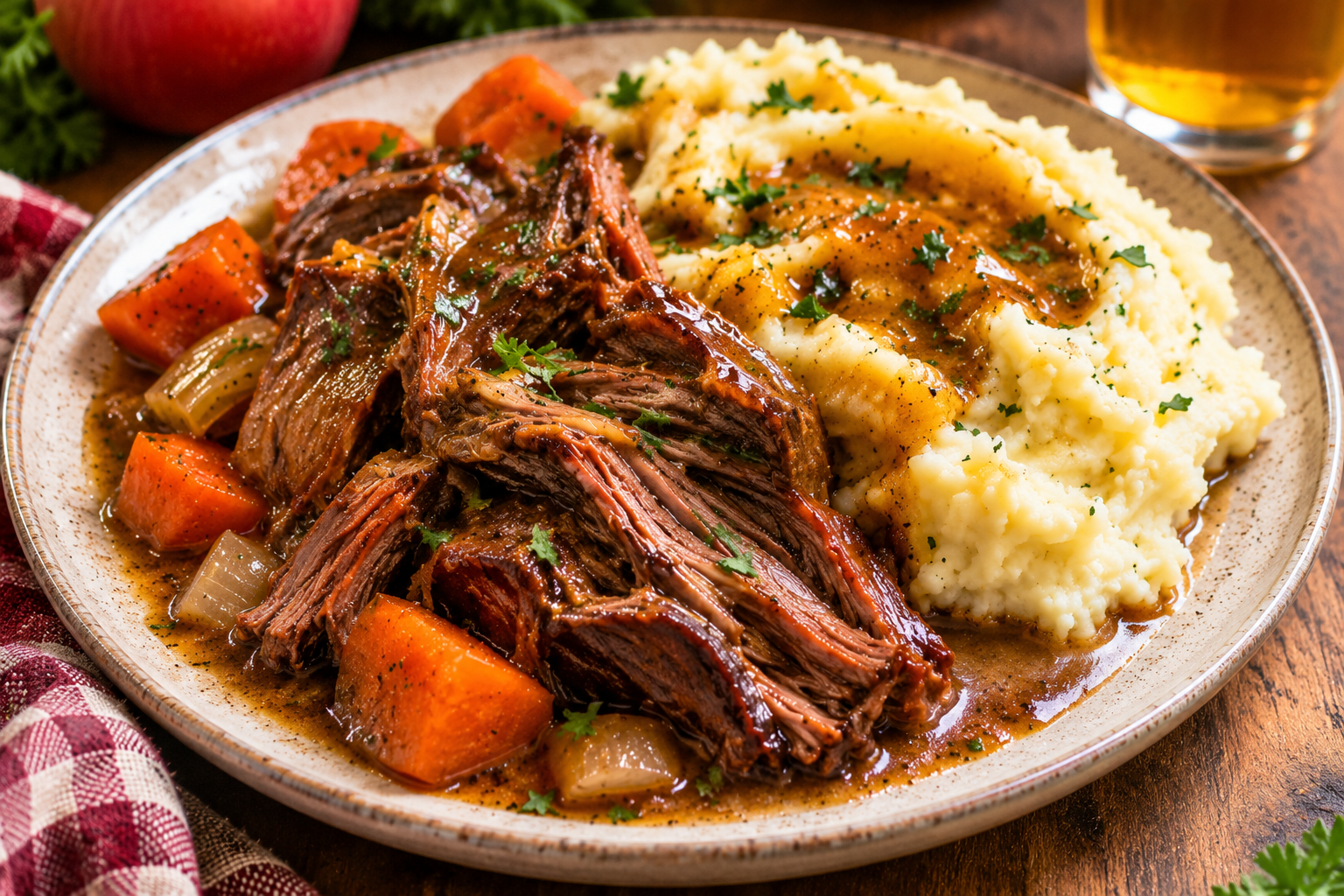
Apple Cider Pot Roast with Garlic Mashed Potatoes

Tender chuck roast braised in unsweetened apple cider, beef broth, herbs, and vegetables, served over creamy roasted-garlic mashed potatoes with rich cider gravy.
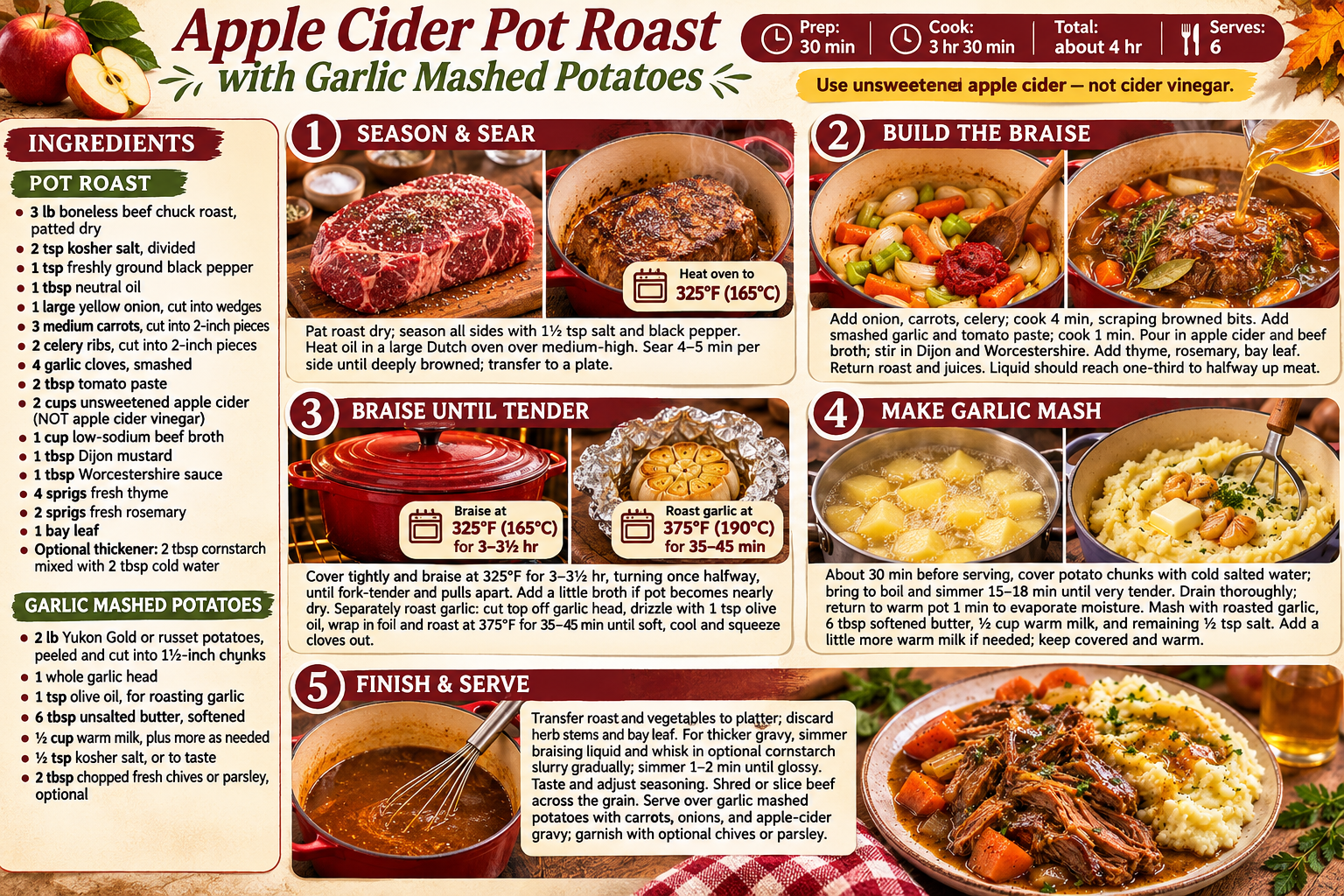
Apple Cider Pot Roast with Garlic Mashed Potatoes
Apple cider pot roast is a cozy, slow-braised dinner built around a well-marbled chuck roast, sweet-tart apple cider, savory beef broth, and classic pot-roast vegetables. As the beef cooks low and slow, it becomes tender enough to pull apart with a fork, while the braising liquid develops into a rich, gently sweet gravy with notes of thyme, rosemary, Dijon, and Worcestershire. Serve it over creamy garlic mashed potatoes for a hearty meal that feels special without relying on complicated techniques.
This recipe makes six servings and takes about 30 minutes of hands-on preparation, followed by roughly 3½ hours of braising and cooking. The potatoes are mashed with roasted garlic, butter, and warm milk, giving them a mellow flavor that complements the cider gravy. Use unsweetened apple cider—not apple cider vinegar—and give the roast enough time in the oven. The most reliable sign that it is ready is tenderness: a fork should slide into the meat easily and twist without resistance.
Why You’ll Enjoy This Recipe
The beef becomes fork-tender. Chuck roast contains connective tissue that softens during a long, gentle braise. Rather than rushing the cooking, the covered Dutch oven gives the meat time to become succulent and easy to shred or slice.
Apple cider adds balance. Unsweetened apple cider brings a rounded apple flavor and mild sweetness to the cooking liquid. Beef broth, tomato paste, Dijon mustard, and Worcestershire sauce keep the gravy savory, so the finished dish does not taste like a sweet sauce.
The vegetables cook in the same pot. Onion, carrots, and celery absorb the braising liquid and help build the flavor of the gravy. There is no need to prepare a separate vegetable side unless you want one.
Garlic mashed potatoes make it a complete comfort-food dinner. Roasted garlic turns soft and mellow, blending into the potatoes with butter and warm milk. The smooth potatoes are ideal for catching the cider-rich gravy.
Much of the cooking is hands-off. After browning the beef and assembling the pot, the oven does most of the work. You can prepare the potatoes near the end of the braising time and focus on finishing the gravy before serving.
Ingredients You’ll Need
Boneless beef chuck roast (3 lb): Choose a roast with visible marbling. The fat and connective tissue help the beef stay moist and become tender during the long braise. Pat it dry before seasoning so it browns properly.
Kosher salt (2 tsp, divided) and black pepper (1 tsp): Season the roast before searing, then use the remaining salt to season the potatoes. If using fine table salt, start with a little less and adjust to taste.
Neutral oil (1 tbsp): A high-heat neutral oil helps the roast develop a deep brown crust without competing with the cider and herbs.
Onion, carrots, and celery: One large yellow onion, three medium carrots, and two celery ribs form the vegetable base. Cut them into generous pieces so they hold their shape during braising.
Garlic and tomato paste: Four smashed garlic cloves flavor the braising liquid. Two tablespoons of tomato paste add savory depth and help give the gravy a fuller taste.
Unsweetened apple cider (2 cups): Use the kind of fresh, nonalcoholic apple cider sold as a drink. It is not the same as apple cider vinegar. Vinegar is far more acidic and is not a direct substitute in this recipe.
Low-sodium beef broth (1 cup): Broth balances the cider and provides savory liquid for braising. Low-sodium broth gives you more control over the final seasoning.
Dijon mustard (1 tbsp) and Worcestershire sauce (1 tbsp): These add tang and savory complexity without making the gravy taste strongly of mustard or Worcestershire.
Fresh thyme, rosemary, and a bay leaf: Four thyme sprigs, two rosemary sprigs, and one bay leaf gently perfume the braising liquid. Remove the woody stems and bay leaf before serving.
Cornstarch slurry (2 tbsp cornstarch mixed with 2 tbsp cold water, optional): Use this only if you prefer a thicker, glossy gravy. Whisk it in gradually at the end rather than adding dry cornstarch directly to the hot liquid.
For the garlic mashed potatoes: You’ll need 2 lb Yukon Gold or russet potatoes, one whole garlic head, 1 tsp olive oil, 6 tbsp softened unsalted butter, ½ cup warm milk plus more as needed, and ½ tsp kosher salt. Chopped chives or parsley (2 tbsp) are optional for serving.
Equipment
A 5–6-quart Dutch oven with a tight-fitting lid is best for browning and braising the roast in one pot. You’ll also need a small piece of foil or a small baking dish for roasting the garlic, a large pot for the potatoes, a colander, tongs, a potato masher or ricer, and a whisk for the optional gravy slurry. If you want to roast the garlic while the roast is braising, use a separate small oven or toaster oven set to 375°F; the pot roast itself cooks at 325°F.
How to Make Apple Cider Pot Roast with Garlic Mashed Potatoes
- Heat the oven and season the beef. Heat the oven to 325°F (165°C). Pat the 3-pound chuck roast dry with paper towels. Season all sides with 1½ teaspoons of the kosher salt and the black pepper. Drying the surface helps the beef brown instead of steam.
- Sear the chuck roast. Heat the neutral oil in a large Dutch oven over medium-high heat. Add the roast and sear for 4–5 minutes per side, until a deep brown crust forms. Turn it carefully with tongs, then transfer it to a plate. Do not rush this step; the browned surface adds flavor to the finished braising liquid.
- Build the vegetable base. Add the onion wedges, carrot pieces, and celery to the same pot. Cook for about 4 minutes, stirring and scraping up the browned bits from the bottom. Add the smashed garlic cloves and tomato paste, then cook for 1 minute so the paste darkens slightly and becomes fragrant.
- Add the cider and herbs. Pour in the apple cider and beef broth. Stir in the Dijon mustard and Worcestershire sauce. Add the thyme sprigs, rosemary sprigs, and bay leaf. Return the roast and any juices from the plate to the pot. The liquid should reach about one-third to halfway up the meat; the roast does not need to be fully submerged.
- Braise until the beef is tender. Cover the Dutch oven tightly and transfer it to the oven. Cook for 3–3½ hours, turning the roast once halfway through. Check for tenderness near the end: a fork should slide in easily and the meat should pull apart without force. If the pot becomes nearly dry, add a little beef broth. If the roast is still firm after 3½ hours, continue cooking in 20-minute increments.
- Roast the garlic for the potatoes. While the beef braises, cut the top off the garlic head to expose the cloves. Drizzle with 1 teaspoon olive oil, wrap it in foil, and roast at 375°F (190°C) for 35–45 minutes, until the cloves are soft. Because the roast uses a 325°F oven, roast the garlic in a separate small oven or toaster oven; alternatively, roast it after removing the pot roast. Let it cool, then squeeze the softened cloves out of their skins.
- Boil the potatoes. About 30 minutes before serving, peel the potatoes and cut them into roughly 1½-inch chunks if you have not already done so. Place them in a large pot and cover with cold salted water. Bring to a boil, then reduce to a simmer and cook for 15–18 minutes, until very tender when pierced with a fork.
- Drain and mash. Drain the potatoes thoroughly and return them to the warm pot for about 1 minute so excess moisture can evaporate. Mash with the roasted garlic, softened butter, warm milk, and remaining ½ teaspoon kosher salt. Add a little more warm milk if needed to reach your preferred consistency. Cover and keep warm.
- Finish the cider gravy. Transfer the roast and vegetables to a platter. Remove and discard the thyme and rosemary stems and bay leaf. If you want thicker gravy, bring the braising liquid to a gentle simmer. Whisk the cornstarch with cold water until smooth, then whisk a little of the slurry into the simmering liquid. Add only as much as needed and simmer for 1–2 minutes, until glossy. Taste and adjust seasoning.
- Serve. Shred the beef into large pieces or slice it across the grain. Spoon garlic mashed potatoes onto plates, add beef, carrots, and onions, and ladle the warm apple-cider gravy over everything. Finish with chopped chives or parsley if desired.
Tips and Troubleshooting
Choose a well-marbled chuck roast. Leaner cuts do not have the same amount of connective tissue and may not become as succulent with this method. A chuck roast is a dependable choice for a long, covered braise.
Brown the meat thoroughly. A dark golden-brown crust creates flavorful browned bits in the Dutch oven. If the pot is crowded or the roast is wet, it may steam instead of sear. Pat it dry and give it room.
Use apple cider, not vinegar. The recipe relies on the mellow sweetness of drinking cider. Apple cider vinegar is much sharper and would make the braising liquid too acidic if substituted in the same quantity.
Keep the pot covered. A tight lid traps moisture and helps maintain a steady braising environment. Open the pot only to turn the roast halfway through or check its progress near the end.
Let tenderness determine the finish time. The 3–3½-hour range is a guide. A particularly thick roast or an oven that runs cool may need longer. If the meat resists a fork, it is not ready; continue cooking and check again.
Avoid watery mashed potatoes. Drain the potatoes well and let them sit in the warm pot briefly before mashing. Add warm milk gradually rather than pouring it all in at once.
Thicken the gravy gradually. The cornstarch slurry is optional. Whisk it smooth with cold water first, then add it a little at a time to simmering liquid. You may not need the full amount if the braising liquid has already reduced.
Easy Variations
Use parsnips with the carrots. Replace some of the carrots with an equal amount of peeled parsnips cut into similar-sized pieces. They bring a slightly earthy sweetness that works well with the cider.
Swap the broth if needed. Low-sodium chicken broth can stand in for beef broth. The gravy will be a little lighter in flavor, so taste it before serving and adjust the seasoning.
Use dried herbs. If fresh thyme and rosemary are unavailable, use 1 teaspoon dried thyme and ½ teaspoon dried rosemary. Add them with the cider and broth.
Choose your potato texture. Yukon Gold potatoes make naturally creamy, buttery mash, while russets give a fluffier result. Either works with the roasted garlic and milk in this recipe.
Make the gravy thicker or keep it rustic. Leave the braising liquid as it is for a lighter, spoonable jus, or use the optional cornstarch slurry for a thicker gravy that clings to the beef and potatoes.
What to Serve With Apple Cider Pot Roast
The garlic mashed potatoes, carrots, and onions already make this a substantial meal. If you want another side, choose something fresh or green to balance the rich beef and gravy. Steamed green beans, roasted Brussels sprouts, sautéed cabbage, or a crisp green salad all work well. A simple salad with a sharp vinaigrette is especially useful alongside the buttery potatoes.
For a larger family dinner, serve warm dinner rolls or crusty bread so everyone can mop up the remaining gravy. Keep additional sides simply seasoned; the roast and its cider-herb sauce should remain the centerpiece.
Make-Ahead, Storage, and Reheating
Make ahead: The beef and gravy can be cooked up to 2 days in advance. Cool them promptly, then refrigerate in a covered container. For the best texture, make the garlic mashed potatoes on the day you plan to serve the meal. You can roast the garlic ahead and refrigerate the squeezed-out cloves in a small covered container.
Refrigerate: Store the beef, vegetables, and gravy separately from the mashed potatoes in airtight containers for up to 4 days. Keeping the components separate makes it easier to reheat the beef gently without overworking the potatoes.
Freeze: Freeze the beef and gravy for up to 3 months. Mashed potatoes can be frozen for up to 1 month, although their texture may soften slightly after thawing. Thaw frozen portions overnight in the refrigerator.
Reheat the beef and gravy: Place them in a covered saucepan over low heat, stirring occasionally, or warm them in a covered oven-safe dish at 300°F until steaming hot throughout. Add a splash of broth if the gravy has thickened too much in the refrigerator.
Reheat the mashed potatoes: Warm them gently in a saucepan over low heat with a splash of milk, stirring until hot and creamy. Avoid high heat, which can make the potatoes stick to the pan. Add a little more butter or milk if they seem stiff.
Frequently Asked Questions
Can I make apple cider pot roast ahead of time?
Yes. Cook the beef and gravy up to 2 days ahead, cool promptly, and refrigerate them covered. Reheat gently with a little broth if needed. Make the garlic mashed potatoes on the day of serving for the freshest texture.
Can I cook this pot roast in a slow cooker?
Yes. Sear the beef and sauté the vegetables first, then transfer them to the slow cooker with the cider, broth, seasonings, and herbs. Cook on LOW for 8–9 hours or HIGH for 4–5 hours, until the beef is fork-tender. Prepare the garlic mashed potatoes separately, and thicken the cooking liquid on the stovetop if desired.
Why is my pot roast still tough?
It most likely needs more cooking time. Chuck roast becomes tender as its connective tissue softens during braising. Keep the pot covered and continue cooking in 20-minute increments until a fork slides in easily and the meat pulls apart without resistance.
Can I use apple cider vinegar instead of apple cider?
No. Use unsweetened drinking apple cider. Apple cider vinegar is much more acidic and is not a suitable one-for-one replacement. If you cannot find drinking cider, use additional beef broth rather than substituting vinegar.
Do I have to thicken the gravy?
No. The braising liquid can be served as a thinner sauce. The cornstarch slurry is optional and is only needed if you prefer a thicker, glossy gravy. Add it gradually so the sauce does not become overly thick.
Which potatoes are best for garlic mashed potatoes?
Both Yukon Gold and russet potatoes work. Yukon Gold potatoes make a creamy, buttery mash, while russets produce a lighter, fluffier texture. Cut the potatoes into even chunks so they cook at the same rate.
A Comforting Pot Roast Dinner Worth Taking Your Time For
This apple cider pot roast brings together deeply browned chuck roast, tender vegetables, fragrant herbs, and a balanced cider gravy. Served over roasted-garlic mashed potatoes, it makes a satisfying meal for a relaxed weekend dinner or a holiday table. Give the beef enough time to become fork-tender, use real unsweetened apple cider, and finish the gravy to the consistency you like. Once the potatoes are ready and the roast is resting in its sauce, dinner is ready to bring to the table.
Ready to make something?
Turn inspiration into dinner.
Browse our tested recipes for practical step-by-step ideas, weeknight favorites and something delicious to try next.
Find your next recipe →Helpful Tools for This Recipe
Disclosure: Affiliate disclosure: This post contains affiliate links. As an Amazon Associate I earn from qualifying purchases at no extra cost to you.
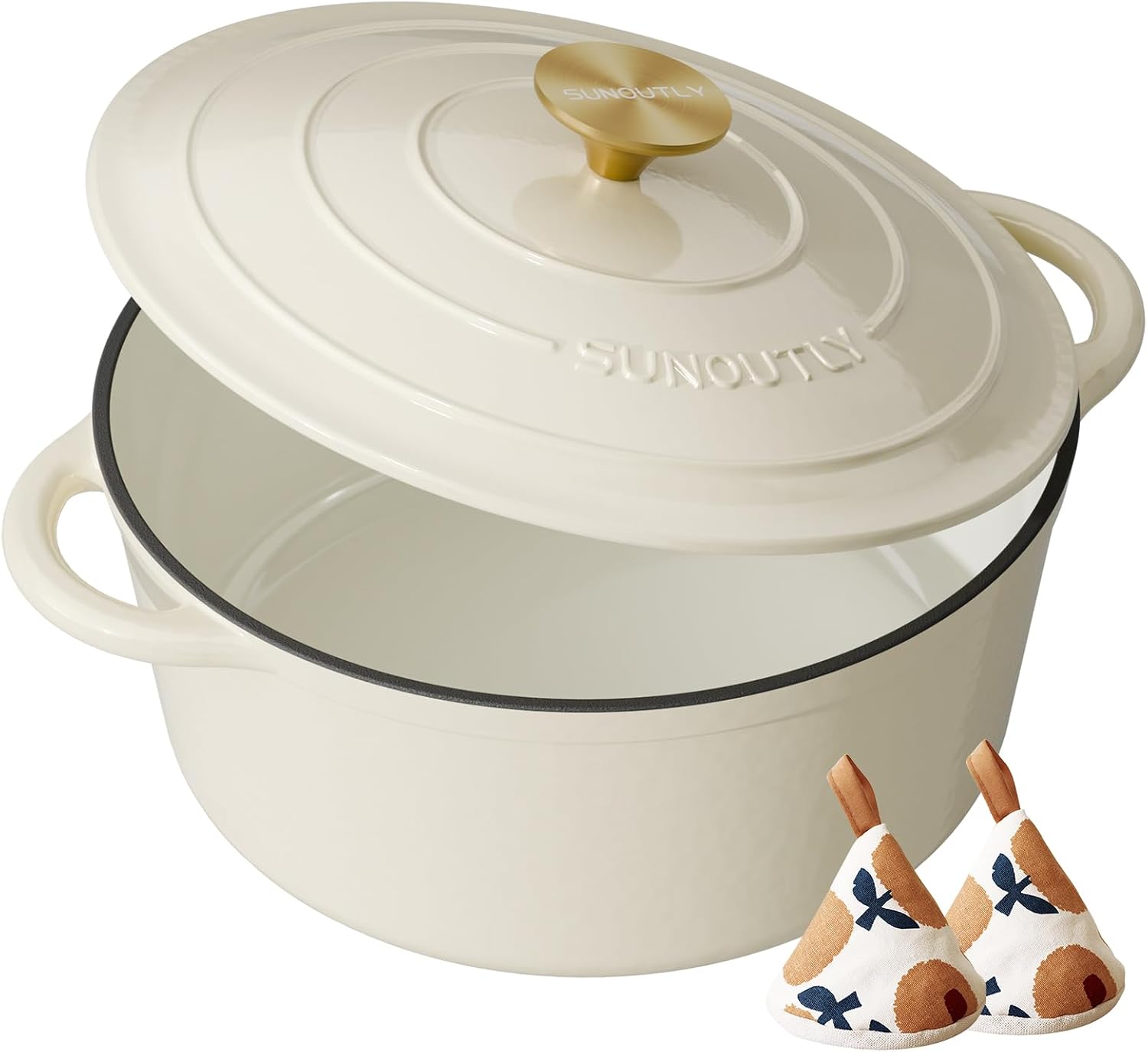 (paid link)
Enameled Cast Iron Dutch Oven (6-Quart)
Essential for simmering hearty soups, braising meats, and deep-browning chili without hot spots.
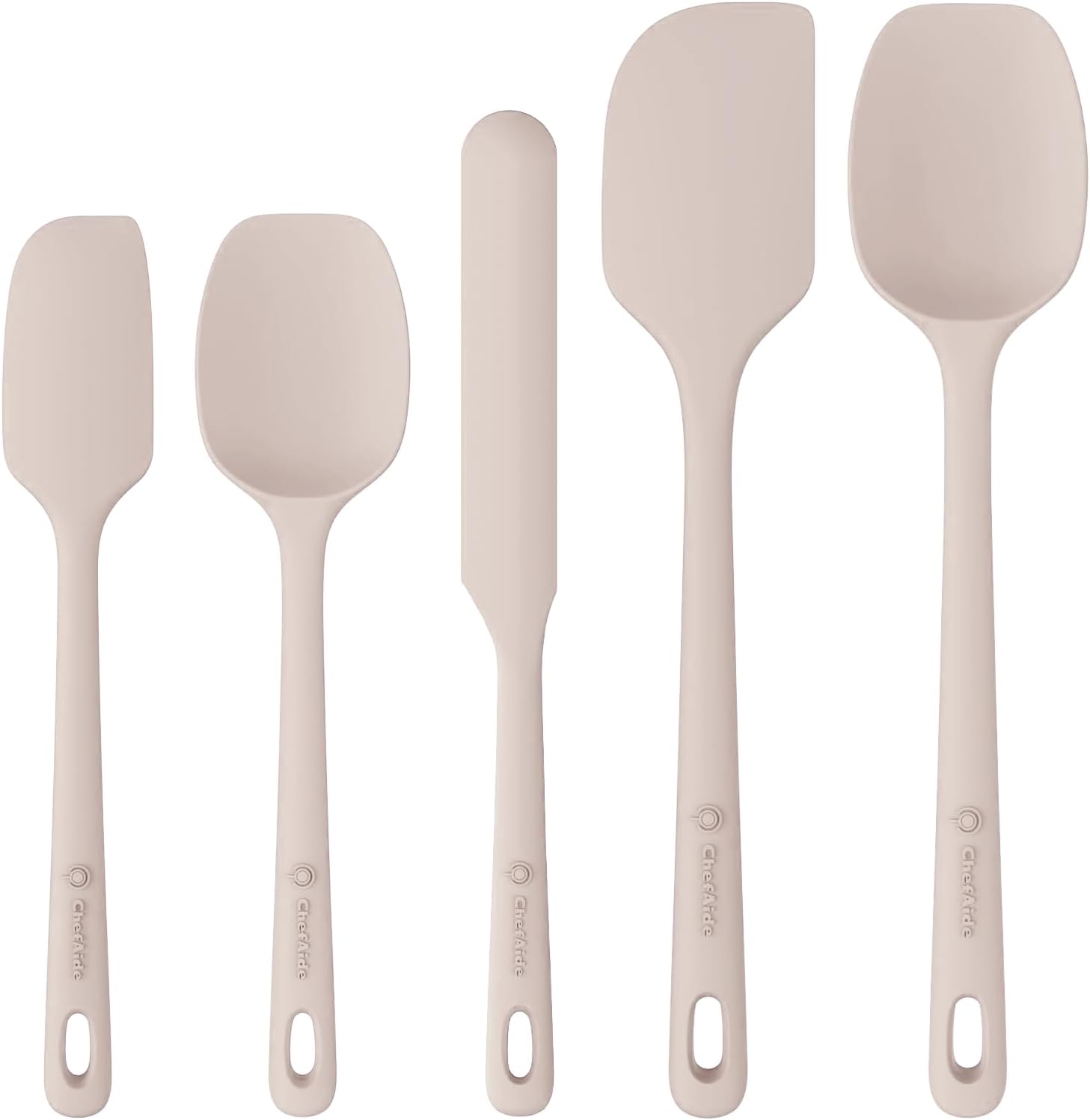 (paid link)
Heat-Resistant Seamless Silicone Spatula Set
Withstands up to 450°F and scrapes nonstick pans cleanly without scratching protective coatings.