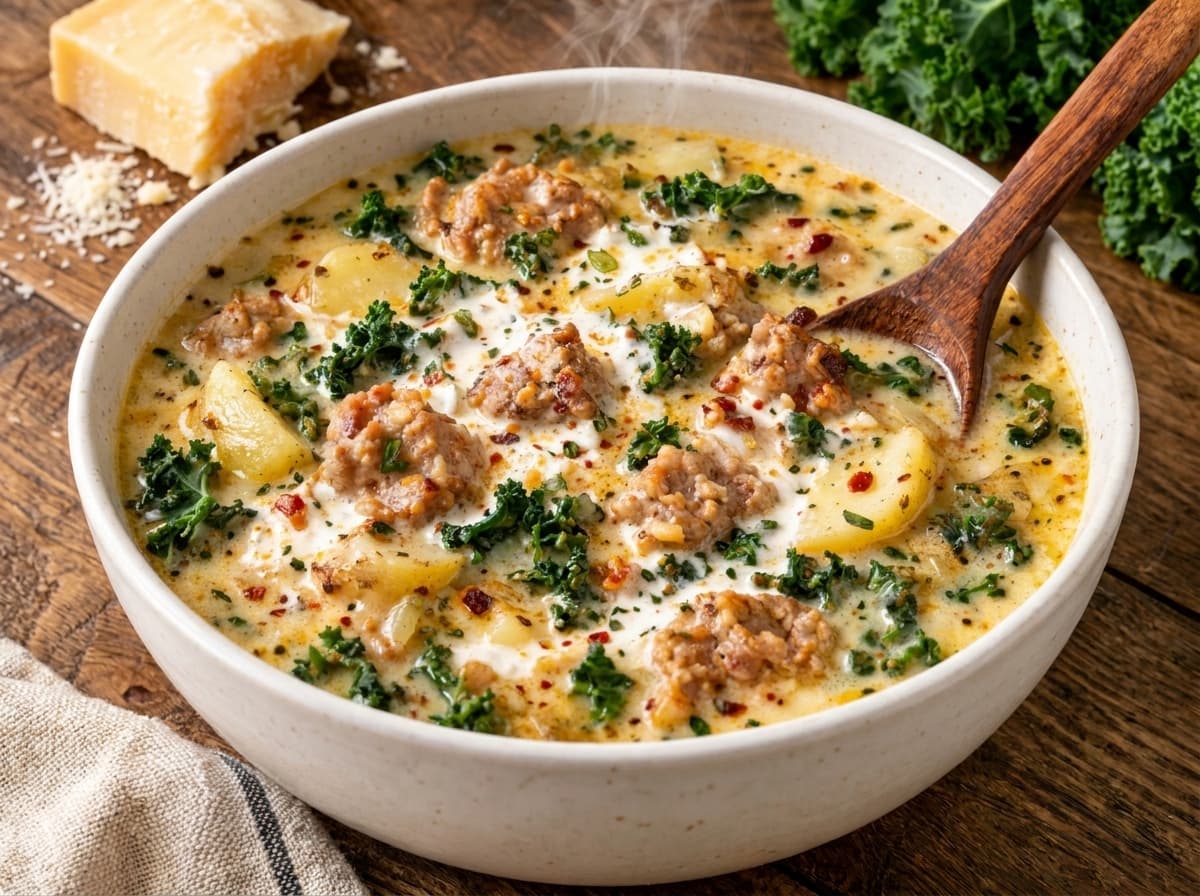
Copycat Olive Garden Zuppa Toscana

A creamy Italian-style soup with sausage, potatoes, kale, garlic, and a gently spicy broth inspired by the popular restaurant favorite.
Busy-day cooking works best when the recipe has a clear rhythm. Copycat Olive Garden Zuppa Toscana gives you that rhythm without requiring a complicated kitchen setup. A creamy Italian-style soup with sausage, potatoes, kale, garlic, and a gently spicy broth inspired by the popular restaurant favorite. The goal is a meal you can make confidently, understand as you cook, and repeat later without starting from scratch every time.
Recipe at a glance
Prep: about 10–25 minutes depending on the recipe
Cook/chill: varies by method
Servings: about 4 unless the ingredient list indicates otherwise
These quantities are a starting draft for site testing. Final timing and serving details should be checked in your own kitchen before publication as a tested recipe.
Ingredients
- 1 lb Italian sausage
- 1 tbsp olive oil
- 1 onion
- 3 garlic cloves
- 4 cups chicken broth
- 3 cups thinly sliced potatoes
- 3 cups chopped kale
- 1 cup heavy cream
- 1/2 tsp red pepper flakes
- Salt and pepper
Ingredient notes
The list is intentionally practical. Use full-fat ingredients when you want the richest texture, and choose lower-fat substitutions when the recipe can tolerate them. For restaurant-style recipes, the branded product is not required; the goal is to reproduce the flavor profile with ordinary grocery-store ingredients.
How to make it
Step 1: Brown sausage in a large soup pot. Break it into small pieces and drain excess fat if necessary.
The most important cue here is to watch the food rather than the timer alone. If a pan runs hotter or your ingredients are colder, a minute or two can make a meaningful difference.
Step 2: Add onion and cook until softened. Add garlic and red pepper flakes.
The most important cue here is to watch the food rather than the timer alone. If a pan runs hotter or your ingredients are colder, a minute or two can make a meaningful difference.
Step 3: Pour in chicken broth and add potatoes. Simmer until the potatoes are tender.
The most important cue here is to watch the food rather than the timer alone. If a pan runs hotter or your ingredients are colder, a minute or two can make a meaningful difference.
Step 4: Add kale and cook until wilted.
The most important cue here is to watch the food rather than the timer alone. If a pan runs hotter or your ingredients are colder, a minute or two can make a meaningful difference.
Step 5: Lower the heat and stir in cream. Warm gently without aggressively boiling.
The most important cue here is to watch the food rather than the timer alone. If a pan runs hotter or your ingredients are colder, a minute or two can make a meaningful difference.
Step 6: Taste and adjust salt, pepper, and chili. Serve hot.
The most important cue here is to watch the food rather than the timer alone. If a pan runs hotter or your ingredients are colder, a minute or two can make a meaningful difference.
Why you will want to make it again
The most useful thing about Copycat Olive Garden Zuppa Toscana is how many small choices it leaves open without becoming confusing. You can keep the core method exactly as written and still change the level of sweetness, spice, crunch, richness, or freshness. That flexibility is what makes a recipe earn a place in a real home-cooking rotation.
When you make it, pay attention to the cues rather than the clock alone. A sauce is ready when it coats instead of running like water. A browned protein should look browned, not gray. A baked or fried exterior should have the color and texture you expect before you move it. Those visual and sensory checks are what make recipes more repeatable across different kitchens.
Ingredient notes
Start with the ingredients that matter most
You do not need the most expensive version of every ingredient. You do need to understand which ingredients carry the identity of the dish. For creamy recipes, the dairy and seasoning matter. For copycat sauces, the balance of sweet, salty, tangy, and creamy ingredients matters. For crisp foods, the coating and cooking temperature matter more than decorative toppings.
Prep before heat
Once the skillet, oven, or air fryer is hot, the recipe often moves quickly. Measure sauces, chop vegetables, and have finishing ingredients nearby before you start cooking. This is particularly important for garlic, dairy, and sugars, which can change quickly under heat.
Common mistakes to avoid
- Crowding the pan. Food that is packed too tightly often steams before it browns.
- Adding all the seasoning at once. Layering lets you control the final balance.
- Cooking only by the timer. Use color, texture, and safe internal temperatures where relevant.
- Skipping the resting or chilling step. Many sauces, salads, desserts, and cooked proteins improve once they settle.
- Overcomplicating substitutions. Change one major variable at a time so you know what affected the result.
Make-ahead strategy
You can make Copycat Olive Garden Zuppa Toscana easier to fit into a busy week by separating preparation from assembly. Cook or chop the sturdy components first, refrigerate them properly, and save delicate items—crunchy toppings, fresh herbs, sliced avocado, or crisp bread—for the final minute. This approach gives you the convenience of meal prep without forcing every ingredient to sit in the refrigerator for the same amount of time.
For family meals, make the base recipe as neutral as practical and put stronger toppings on the table separately. That way one batch can satisfy people who prefer mild flavors and people who want extra heat or tang.
Serving ideas
Think about what Copycat Olive Garden Zuppa Toscana is missing when you plan the rest of the plate. Rich dishes benefit from something fresh or acidic. Crisp dishes benefit from a creamy element. Mild meals can handle a bolder sauce or pickle. Sweet breakfasts often need only fruit and yogurt to feel complete. Those contrasts are more useful than adding another complicated side just because the plate looks empty.
Storage and reheating
Cool perishable leftovers promptly and store them in covered containers. For the best quality, keep crunchy toppings, sauces, and fresh garnishes separate when the recipe allows. Reheat gently if the recipe contains dairy, cheese, or delicate seafood. For fried or crisp foods, an oven, skillet, or air fryer usually restores texture better than a microwave.
Because storage life depends on the ingredients and how quickly the food was chilled, use food-safety guidance appropriate for your refrigerator, and discard anything with signs of spoilage.
Frequently asked questions
Can I make Copycat Olive Garden Zuppa Toscana ahead of time?
Yes, with the right strategy. Prepare the parts that hold well in advance, then finish or assemble the delicate components close to serving. This is especially helpful for sauces, chopped vegetables, cooked grains, and meal-prep breakfasts.
How can I make the recipe taste more like the restaurant or café version?
Focus on texture first, then balance. Familiar restaurant food is often memorable because of a specific combination of crispness, creaminess, acidity, sweetness, saltiness, and temperature—not because one secret spice carries the whole recipe.
Can I substitute ingredients?
Usually. Similar ingredients are the safest place to start: Greek yogurt for some sour cream, oat milk for milk, chicken thighs for chicken breast, or different vegetables with comparable cooking times. Expect the texture to change slightly when you change the fat or water content.
What is the best way to scale this recipe?
Scale the main ingredients first, then adjust powerful ingredients such as salt, vinegar, chili, and sweeteners after tasting. Large batches often need less aggressive seasoning than a simple multiplication suggests.
Easy variations
- Use spinach instead of kale.
- Add white beans for extra bulk.
- Use half-and-half for a lighter finish.
Final thoughts
The best version of Copycat Olive Garden Zuppa Toscana is the one that fits your kitchen. Once you make it once, you will know which parts you want to keep exactly the same and which parts you can personalize. That is the advantage of cooking at home: the recipe is a guide, not a restriction.