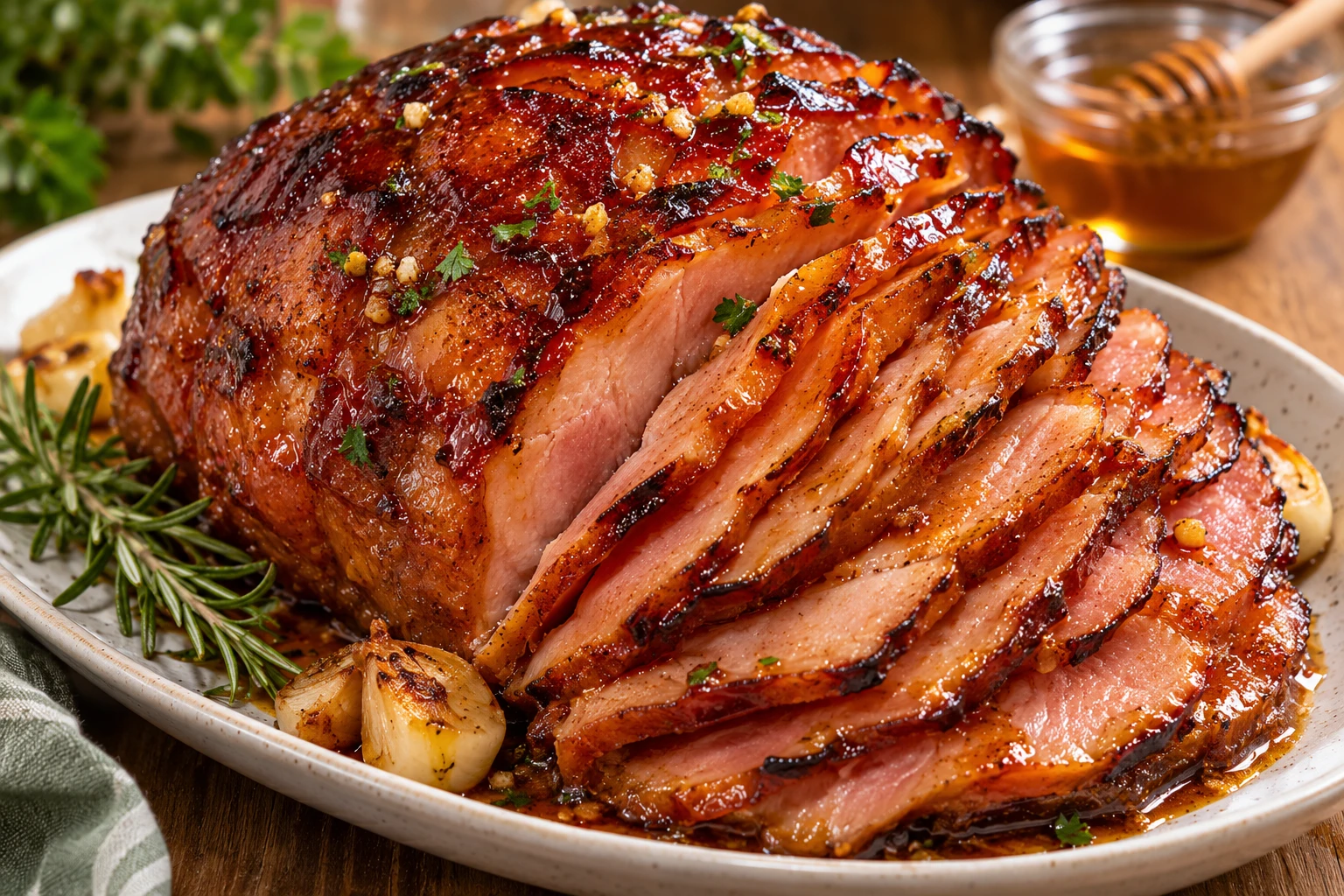
Sticky Honey Garlic Glazed Ham with Crispy Edges

A holiday ham should feel special without requiring complicated last-minute cooking. This Sticky Honey Garlic Glazed Ham with Crispy Edges starts with a fully cooked, bone-in spiral ham, then adds a glossy glaze made from honey, brown sugar
Sticky Honey Garlic Glazed Ham with Crispy Edges
Prep time: 20 minutes | Cook time: 120 minutes | Servings: 10
Introduction
A holiday ham should feel special without requiring complicated last-minute cooking. This Sticky Honey Garlic Glazed Ham with Crispy Edges starts with a fully cooked, bone-in spiral ham, then adds a glossy glaze made from honey, brown sugar, Dijon mustard, garlic, cider vinegar, butter, and warm spices. The oven does most of the work while the ham heats gently under foil. During the final part of cooking, repeated brushing builds a flavorful coating around the slices. A very short broil at the end creates caramelized edges, so the outside has a little crispness while the interior stays tender. Because spiral ham is already sliced, it is easy to serve at a gathering; the key is to warm it gently and glaze it late rather than bake it uncovered for the entire time.
Why You'll Enjoy This Recipe
This recipe uses a commercially fully cooked ham, so the job is reheating and adding flavor rather than cooking raw pork from scratch. That makes the process more predictable for a holiday meal. The honey and brown sugar create a shiny, sweet glaze, while Dijon and apple cider vinegar keep it from tasting flat. Garlic adds savory depth, and smoked paprika gives the glaze a gentle smoky note. The spiral cuts help the glaze reach between slices, but they also mean the ham can dry out if exposed to heat for too long. The covered roasting stage protects moisture, and the final uncovered stage gives the glaze time to cling and caramelize. The finishing broil is optional in spirit but important for the crisp-edge effect: it should be brief, close attention is essential, and the ham should never be left unattended under the broiler.
Ingredients You'll Need
- 1 fully cooked bone-in spiral-sliced ham, 8–9 lb (3.6–4.1 kg)
- 1 cup honey
- ½ cup packed light brown sugar
- ¼ cup Dijon mustard
- 6 garlic cloves, finely minced
- 2 tbsp apple cider vinegar
- 2 tbsp unsalted butter
- 1 tsp smoked paprika
- ½ tsp black pepper
- ¼ tsp ground cloves (optional)
- 2–3 sprigs fresh rosemary, for the pan
Choose a fully cooked, bone-in spiral-sliced ham weighing 8–9 pounds. Check the label: this method is written for a commercially fully cooked ham, not a fresh or uncooked ham. Honey and packed light brown sugar form the sweet base. Dijon mustard supplies tang and helps balance the sweetness; minced garlic provides the main savory flavor. Apple cider vinegar brightens the glaze, and unsalted butter gives it a smoother finish. Smoked paprika and black pepper season the mixture, while a small amount of ground cloves is optional. Rosemary goes into the roasting pan with water to gently perfume the steam. Measure the glaze ingredients before heating so you can brush the ham promptly once it is uncovered.
Equipment
Use a sturdy roasting pan, ideally with a rack, and enough heavy-duty foil to cover it tightly. A small saucepan is useful for warming the glaze evenly; a whisk or spoon helps dissolve the sugar. Keep a pastry brush nearby for applying thin, even layers between the accessible spiral slices. An instant-read thermometer is the most reliable way to check the center temperature without touching the bone. A shallow broiler-safe pan or foil-lined tray makes the final crisping stage easier to manage. Also have a carving fork and sharp knife ready for serving, although the spiral cut means many slices will separate easily.
How to Make the Recipe
- Heat the oven to 325°F (165°C). Remove all packaging and any plastic disk from the ham. Place the ham cut-side down in a roasting pan; add ½ cup water and the rosemary. Cover the pan tightly with foil.
- Warm honey, brown sugar, Dijon, garlic, vinegar, butter, paprika, pepper, and cloves in a small saucepan over medium-low heat for 3–4 minutes, stirring until the sugar dissolves and the glaze is pourable. Do not boil hard.
- Roast the covered ham for about 10–12 minutes per pound, approximately 1 hour 20 minutes to 1 hour 45 minutes for an 8–9 lb ham. Follow the package directions and heat until the center reaches 140°F (60°C) for a commercially fully cooked ham; check without touching the bone.
- Uncover the ham for the final 25–30 minutes. Brush generously with glaze, including between accessible slices. Return to the oven and brush again every 10 minutes, reserving a little glaze for serving.
- When heated through and glossy, transfer the ham carefully to a foil-lined shallow pan. Broil 6–8 inches from the element for 1–3 minutes to blister the glaze and crisp the edges. Watch continuously; honey can burn quickly.
- Rest for 10–15 minutes. Spoon over the reserved glaze and pan juices, then serve.
Begin with the oven fully preheated to 325°F (165°C). Set the ham cut-side down in the roasting pan, add ½ cup water and the rosemary sprigs, and cover tightly with foil. While it starts heating, warm the honey, brown sugar, Dijon, garlic, vinegar, butter, paprika, pepper, and optional cloves over medium-low heat for 3–4 minutes. Stir until the sugar dissolves and the glaze becomes pourable; do not boil it aggressively. Roast covered for about 10–12 minutes per pound, using the package directions as the guide. For a commercially fully cooked ham, heat the center to 140°F (60°C), checking away from the bone. Uncover for the final 25–30 minutes, brush with glaze, and repeat about every 10 minutes. Broil 6–8 inches from the element for only 1–3 minutes, watching continuously. Rest 10–15 minutes before serving with reserved glaze and pan juices.
Tips and Troubleshooting
Keep the ham covered for most of its time in the oven. The foil traps steam from the water in the pan and reduces moisture loss from the exposed spiral slices. Apply glaze near the end instead of at the beginning; sugar can darken too much during a long roast. Brush in thin layers so the glaze coats the surface rather than pooling heavily in the pan. When checking temperature, insert the thermometer into the thickest part without touching bone, which can give a misleading reading. During broiling, stay beside the oven and look for bubbling, browned edges rather than a dark or blackened coating. If one area colors faster than another, rotate the pan carefully or remove it early. Allow a short rest before carving so juices settle and the glaze is less likely to run off immediately.
Easy Variations
For a slightly different flavor, replace up to half of the honey with maple syrup while keeping the total sweetener amount the same. Whole-grain mustard can stand in for Dijon and adds a visible texture. Leave out the ground cloves for a cleaner honey-garlic profile, or use a little extra black pepper for more bite. Fresh thyme can replace rosemary in the roasting pan. Keep the core glaze proportions balanced: the mustard and vinegar are there to offset the sweetness, so avoid removing both at once. This recipe is designed around a large bone-in spiral ham; smaller boneless hams may heat more quickly and should be checked by temperature rather than by the full time estimate.
What to Serve With It
Serve the ham as the centerpiece of a holiday table and spoon a little of the warm pan glaze over each portion. Its sweet-savory flavor works well with sides that bring freshness or a contrasting texture. Consider roasted green beans, steamed broccoli, a crisp green salad, roasted carrots, scalloped or mashed potatoes, dinner rolls, and a tart cranberry side. If the menu already includes several rich dishes, choose a simple vegetable and a bright salad. Keep extra glaze in a small serving bowl so guests can add more without repeatedly dipping serving utensils into the roasting pan.
Make-Ahead, Storage, and Reheating
Refrigerate leftover ham within 2 hours of serving. Remove slices from the bone if that makes storage easier, then place them in shallow airtight containers. Refrigerated leftovers are best used within 3–4 days. Freeze portions tightly wrapped or sealed for up to 2 months for best quality; label the package with the date. Thaw frozen ham in the refrigerator. To reheat, place slices in a covered baking dish with a splash of water or broth and warm at 300°F (150°C) until hot, or microwave in short intervals with a cover to limit drying. Reheat leftovers to 165°F (74°C). Avoid repeated reheating of the entire batch; warm only what you plan to serve.
Frequently Asked Questions
Can I make the honey garlic glaze ahead? Yes. Prepare it up to 3 days ahead, refrigerate in a covered container, and warm gently until brushable before using.
How do I keep spiral ham moist? Keep it covered for most of the heating, add water to the roasting pan, and apply the glaze during the final 25–30 minutes.
Does the ham need to rest? A 10–15 minute rest makes serving easier and gives the juices and glaze a moment to settle.
Can I skip the broiler? Yes. The ham will still be glazed and flavorful; the broiler simply adds the extra caramelized edges. If you skip it, allow the final oven glaze to become glossy without letting it burn.
Closing Thoughts
This honey garlic glazed ham is built around a few dependable techniques: gentle covered reheating, a balanced glaze, late-stage brushing, and a very brief broil. Follow the temperature guidance on the ham package, use a thermometer, and keep a close eye on the sugary coating at the end. With those details handled, you can bring a glossy centerpiece to the table and spend more time enjoying the meal with everyone else.
Ready to make something?
Turn inspiration into dinner.
Browse our tested recipes for practical step-by-step ideas, weeknight favorites and something delicious to try next.
Find your next recipe →Helpful Tools for This Recipe
Disclosure: Affiliate disclosure: This post contains affiliate links. As an Amazon Associate I earn from qualifying purchases at no extra cost to you.
 (paid link)
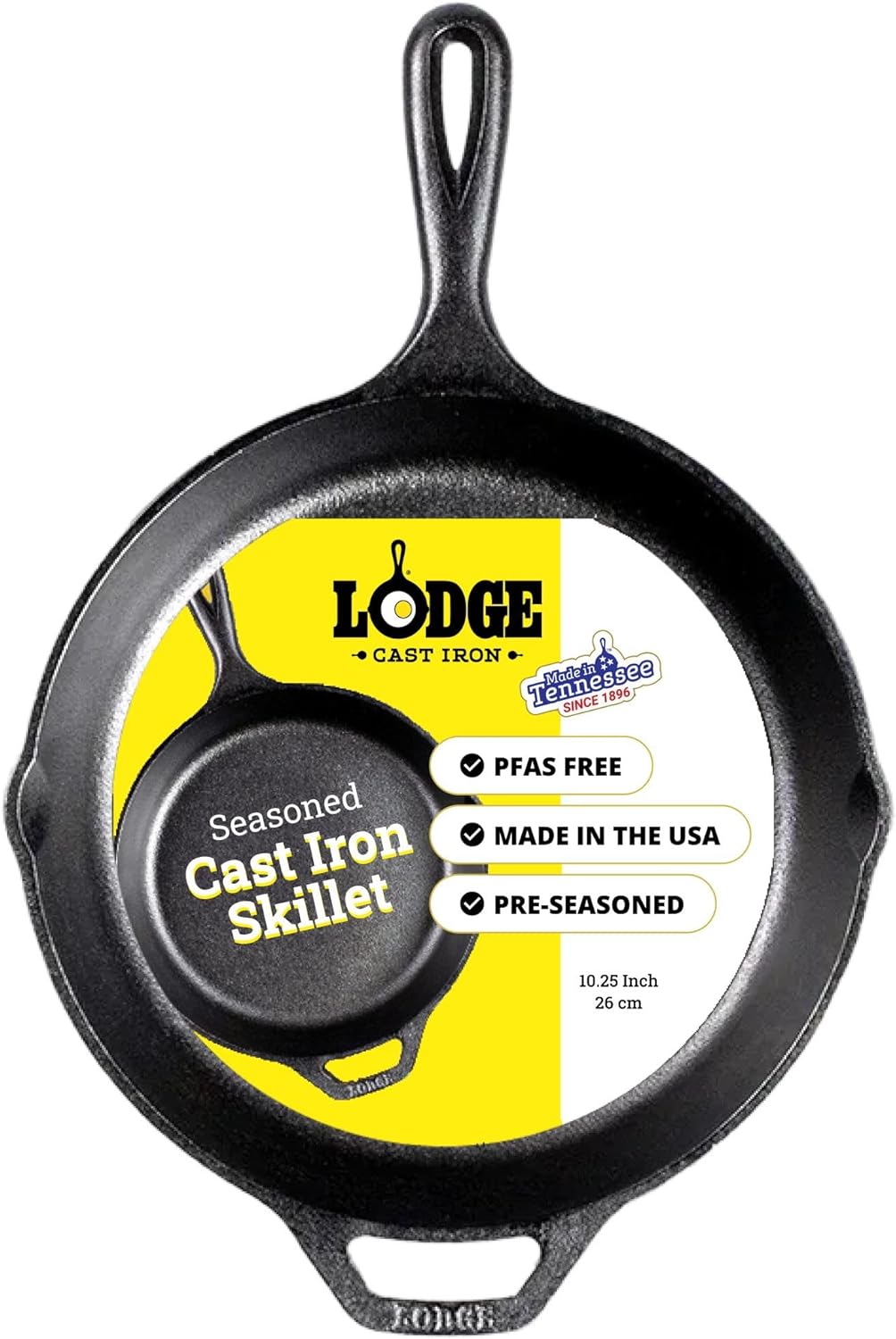
Pre-Seasoned Cast Iron Skillet (10.25-inch)
Provides exceptional heat retention and unbeatable browning for chicken, steaks, and skillet pastas.
 (paid link)
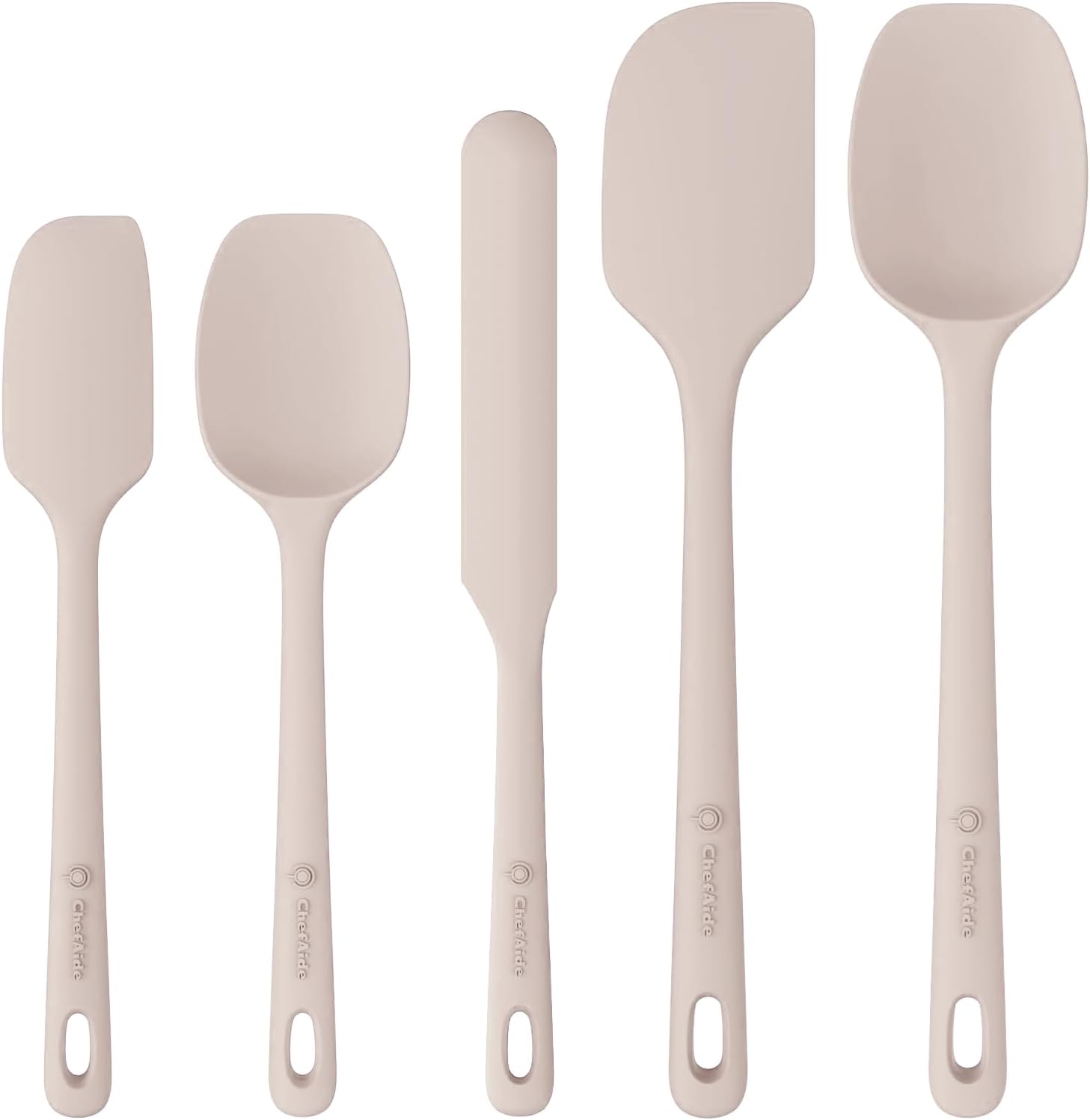
Heat-Resistant Seamless Silicone Spatula Set
Withstands up to 450°F and scrapes nonstick pans cleanly without scratching protective coatings.
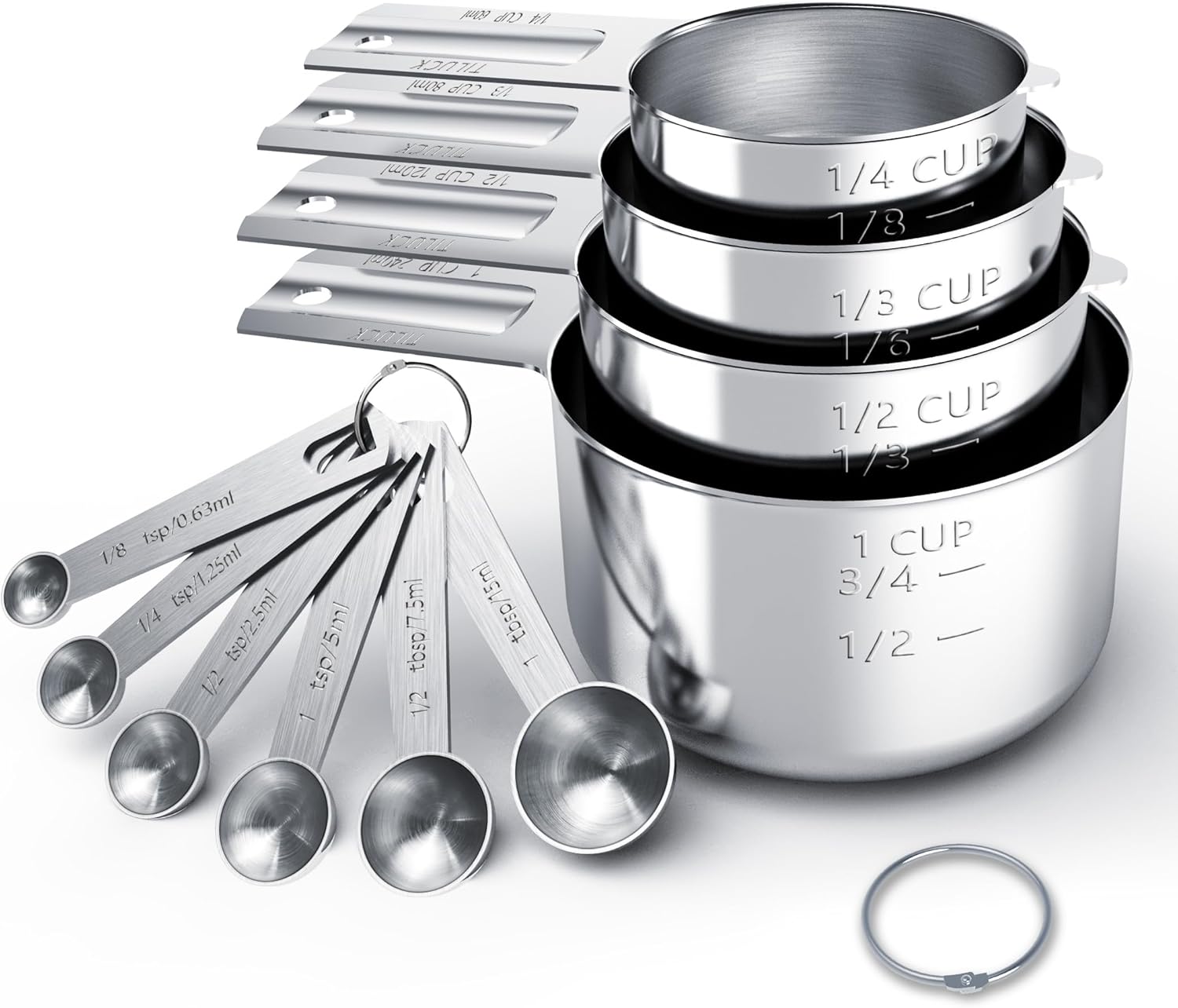 (paid link)
Heavy-Gauge Stainless Steel Measuring Cups & Spoons
Etched measurement markings never fade through dishwashing, ensuring precise seasoning balance.